
Home > Mattress Buying Guide
Mattress Buying Guide
1. How you like to sleep
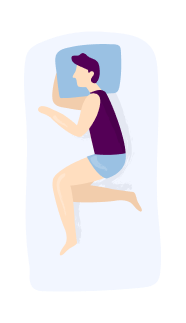
Side sleepers
Side sleeping puts more pressure on your shoulders and hips. A mattress that is too firm can create pressure points and leave you feeling sore.
Look for a mattress with enough cushioning to let your shoulders and hips sink in while still supporting your spine.
Recommendation:
Medium-soft to medium mattresses are a useful starting point, but your body weight and personal preference matter too.
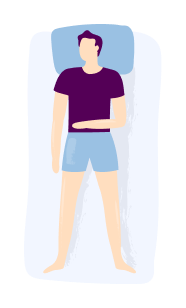
Side sleepers
Back sleepers generally need a balance of cushioning and support. You want the mattress to support your lower back without creating excessive pressure.
Recommendation:
Medium to medium-firm mattresses are a good place to start.
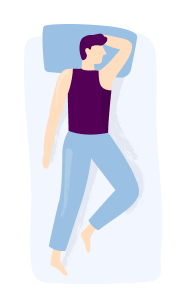
Stomach sleepers
Stomach sleeping can allow your hips to sink too far into a mattress that is too soft. A firmer, more supportive surface can help keep your body from sinking excessively.Recommendation:
Medium to medium-firm mattresses are word considering.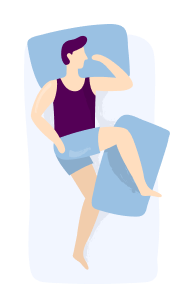
Combination sleepers
If you move between positions during the night, you need a mattress that does not make changing positions difficult.
Recommendation:
Look for a balance of pressure relief, support, and responsiveness. A mattress with some bounce can make it easier to move around.
2. Know Main Mattress Types
Different mattress constructions create different feels. None is automatically right for everyone.
Memory Foam
Memory foam contours closely to your body and can provide pressure relief.
Pros:
- Good pressure relief
- Excellent motion isolation
- Quiet
- Contouring feel
Cons:
- Can retain heat, depending on the construction
- Some find deep contouring restrictive
- Usually less responsive than springbased mattresses
Latex
Latex tends to feel more responsive and bouyant than memory foam. It can provide pressure relief without the same sinking sensation.
Pros:
- Responsive
- Durable
- Good pressure relief
- Generally easier to move around on
Cons:
- Can be more expensive
- Different latex types can feel quite different
- Less of the deep hug some people like from memory foam
Innerspring
Traditional innerspring mattresses use a network of metal coils. They tend to have a more traditional, responsive feel.Pros:
- Good airflow
- Responsive
- Often easier to move on
- Wide range of firmness options
Cons:
- Motion transfer can be higher
- Quality varies significantly between models
- Some cheaper designs can feel less substantial
Hybrid
Hybrid mattresses combine coils with a foam or latex comfort layers.Pros:
- Combines support and cushioning
- Good airflow in many designs
- Usually responsive
- Available in many firmness levels
Cons:
- Can be heavier
- Often more expensive than basic foam mattresses
- Construction varies widely between brands
3. Consider Your Body Weight
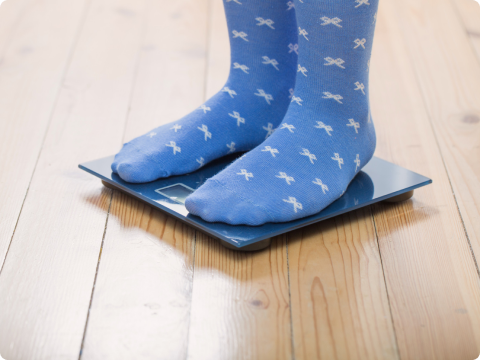
A mattress that feels firm to one person may feel medium or even soft to someone heavier. Likewise, a mattress that feels supportive to a heavier sleeper may feel too firm to someone lighter.
As a general principle:
- Lighter sleepers may experince less sink and may prefer a softer surface.
- Average-weight sleepers usually have a wider range of suitable options.
- Heavier sleepers often need stronger support and may benefit from a mattress designed to handle higher loads.
If two people with different body weights share a bed, choosing a mattress becomes a compromise. In that situation, pay particular attention to support, pressure relief, edge support, and motion isolation.
4. If you share a bed, think about Motion Isolation

If your partner moves around at night, the mattress can determine whether you notice every movement.
Foam mattresses generally absorb movement well. Some hybrid and innerspring mattreses can transfer more motion, although construction varies.
If one person gets up early, moves frequently, or has a different sleep schedule, motion isolation is worth prioritizing.
5. Temperature

If you regularly wake up feeling hot, mattress construction matters.
Dense foam can retain more heat than a highly breathable design. Coil systems can allow more airflow, while latex is also generally considered a more breathable option than traditional memory foam.
But do not judge a mattress solely by its material. The cover, foam density, coil design, room temperature, bedding, and even your pajamas can affect how hot you feel.
If you sleep hot, look at the entire construction, not just a label such as cooling mattress
6. How to Test a Mattress
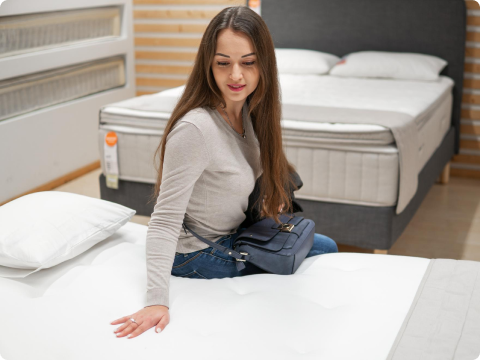
If you are shopping in a store, do more than sit on the edge for 30 seconds. Lie down in your normal sleeping position.
Spend enough time on the mattress to notice:
- Pressure around your shoulders and hips
- Support under your lower back
- Whether your body feels balanced
- How easily you can change positions
- Whether you feel like you are sinking too deeply
- Whether you can comfortably get out of the bed
If you share the mattress with someone else, test it together. If you are buying online, use the trial period properly. Give your body time to adjust rather than making a decision based on the first few minutes
7. Read the Warranty Carefully

A long warranty sounds impressive, but the number of years is only part of the story.
- What defects are covered
- What is excluded
- Whether there is a minimum indentation or sagging threshold
- Whether the warranty is prorated
- Who pays transportation or replacement costs
- Whether the mattress must be used on a specific foundation
- Whether stains or damage can void coverage
A 15-year warranty is not automatically better protection than a 10-year warranty if the terms are significantly different.
8. Understand the Return or Trial Policy
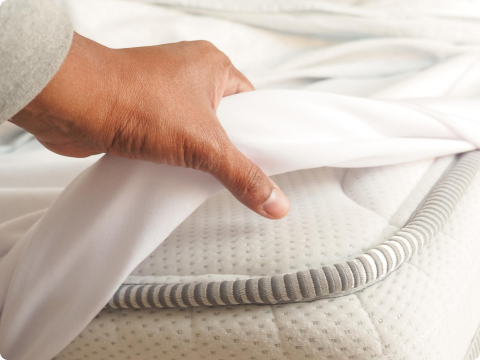
If you are buying online, the return policy can be just as important as the mattress itself.
Before ordering, find out:
- How long you have to try the mattress
- Whether you must sleep on it for a minimum period
- Whether returns are free
- Who arranges pickup
- Whether the mattress can be exchanged instead of returned
- Whether shipping fees are refundable
- Whether there are restocking charges
Do not assume that sleep trial means you can simply return the mattress whenever you want with no conditions. Read the actual policy.
Frequently Asked Questions
01.
Our mattresses are available in all standard sizes:
- Twin (37 in. x 74 in.)
- Full (53 in. x 74 in.)
- Queen (59 in. x 79 in.)
- King (75 in. x 79 in.)
Other specialty sizes such as Twin Extra Long (37 in. x 79 in.), Full Extra Long
(53 in. x 79 in.), California King (71 in. x 82 in.), may be available. Contact us to
inquire.
02.
Mattresses are available in a wide range of comfort levels, from extra firm to ultra plush pillow tops.
- Very Firm – Extra hard, for strong back support. This level is perfect for individuals who require strong support for their back and spine.
- Firm – Solid support with a bit of cushioning. This level is often recommended for back sleepers and those who need a balance between support and softness.
- Medium-Firm – Balanced support and softness. This is the most popular comfort level and is suitable for a wide range of sleepers, including combination sleepers and those with back pain.
- Medium – Comfortable with decent support. It’s generally suitable for most sleeping positions and body types.
- Medium-Plush – Soft and contouring. This is ideal for side sleepers and people who like a bit more comfort without sacrificing support.
- Plush – Very soft, cozy feel. This feel is favored by people who enjoy sinking into their mattress for a cozy feel.
- Ultra-Plush – Super soft, like sleeping on a cloud. This level is great for people who love a very soft and hugging feel from their mattress.
03.
Comfort layers are the soft, cozy parts on top of a mattress that you actually feel when you lie down. They’re like the padding that makes the mattress comfortable. Here are some common types of comfort layers:
- Memory Foam: Memory foam is known for its ability to conform to the shape of your body, providing excellent contouring and pressure relief.
- Latex Foam: Latex foam is responsive and durable. It offers a supportive yet bouncy feel, making it suitable for those who prefer a bit of resilience along with comfort.
- Gel-Infused Foam: Gel-infused foam combines the properties of memory foam with cooling gel particles. This helps regulate temperature and prevent overheating during sleep.
- Polyurethane Foam: Polyurethane foam is versatile and can be found in various levels of firmness. It’s used to provide a range of comfort and support depending on the specific formulation and density.
- Pillow-Top: A pillow-top comfort layer is an additional layer of cushioning sewn onto the top of the mattress. It can be made from various materials, such as memory foam, latex, or fiberfill.
- Hybrid Layers: Consists of a combination of materials, such as memory foam, latex, or micro coils. This is designed to provide a mix of contouring, bounce, and support.
- Quilted Cover: While not always considered a separate comfort layer, the quilted cover on top of the mattress can also contribute to comfort. It’s typically made from fabric and fiberfill, providing a soft and inviting surface.
04.
The best strategy for maintaining a clean and hygienic sleep surface is preventing soiling before it occurs by encasing it in a waterproof mattress protector, which will prevent fluids, allergens, dead skin cells, and more from infiltrating into the mattress.
We reserve the right to deny warranty coverage if the sleep set exhibits stains or soiling of unknown origin or nature and it appears to us, in good faith, that the sleep set may be in an unsanitary condition or may have been damaged by liquid penetration or other abuse.
05.
Click here to find a retailer near you. It is important that you test your mattress before you buy! You can try our mattresses at one of our retailers.
06.
Contact us to inquire. Warranties often vary by brand, brand collection, and lines within collections.